
Why Choose EduExpert
We are deeply familiar with the Erasmus+ programme, and we support schools throughout the entire process—from preparation and documentation to on-site assistance and post-course follow-up. Our goal is to make participation smooth, enjoyable and professionally rewarding for both teachers and coordinators.
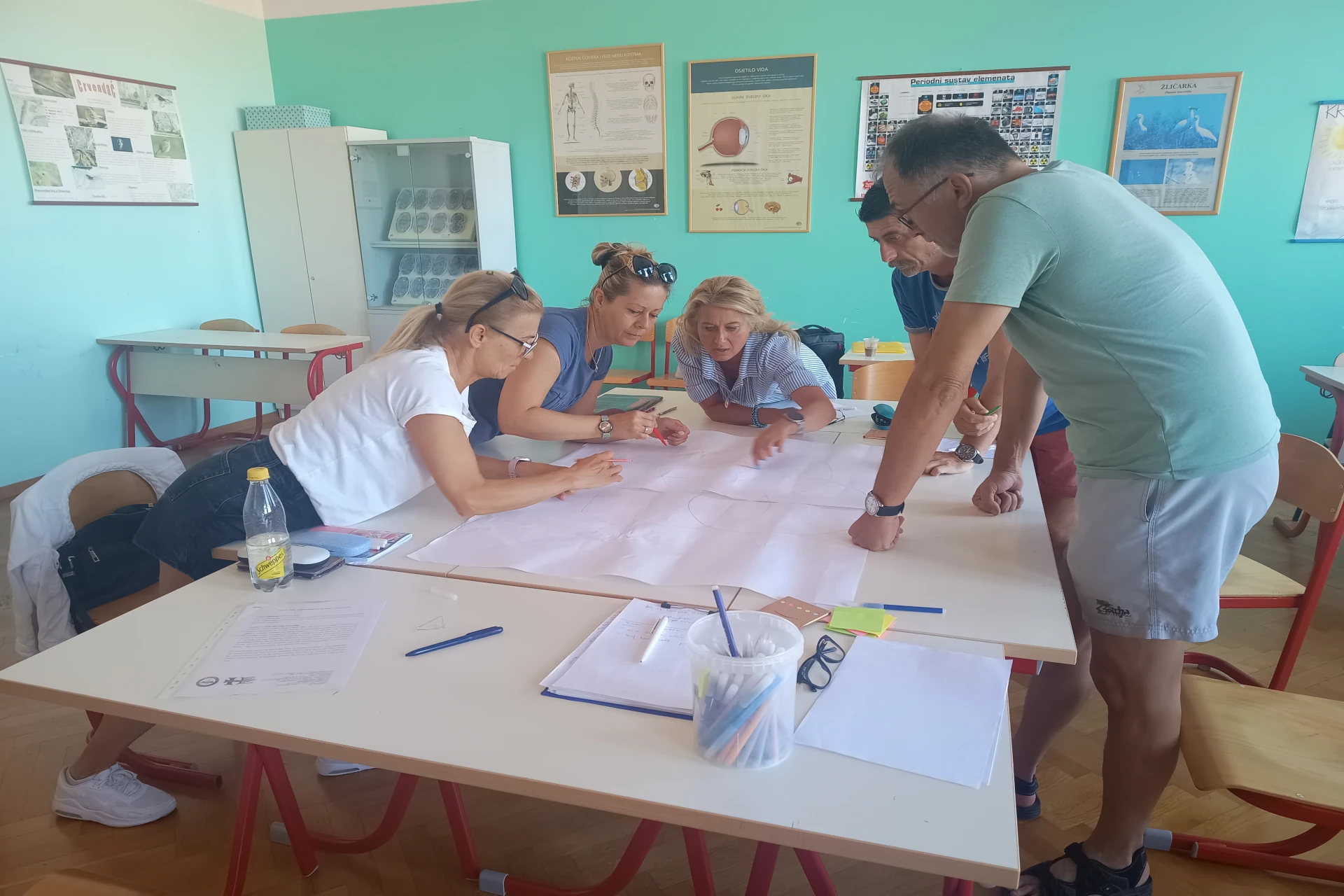
Erasmus+ in Action – Practical Tools for Teachers and Project Coordinators ROVINJ-CONFIRMED
- Judit Vitai
- 35 lessons, 7 days
- English, B1/B1+
- 12 July 2026
Description:
The focus will be placed on analysing the needs of project coordinators at the application stage including the full understanding of the main priorities in the Erasmus+, the development of a quality framework, as well as on elaborating proposals to improve the quality of project implementation. In addition, the course targets the different aspects of the coordinators’ and mentors’ daily activity in providing the necessary support ranging from support for learning purposes to social inclusion and integration. Ample time for the sharing of knowledge, good practices and experiences will also be provided.
The course is preceded by some (voluntary) informal conversation among the group in order for the trainer to clearly assess the learning needs of the participants and this way to adapt the course material more precisely.
Aims and objectives:
To provide teachers and educational staff with confidence and hands-on support to apply for and to successfully manage Erasmus+ projects.
Learning outcomes:
- A set of tools, links, contacts to start with, concrete help with their own project idea and how to elaborate it.
Target groups:
- The seminar is targeted at teachers and those in charge of managing Erasmus+ projects, (representatives of schools, educational institutions, chambers, authorities, etc.)
Minimum level of language: English B1 or B1+
Duration of training: 35 lessons, 7 days
Trainer: Judit Vitai
Date:
- 12-18 July 2026- CONFIRMED
- 11-17 July 2027- Planned
The final confirmation of the course is subject to reaching the minimum number of participants.
Location: Rovinj, Croatia
Price:
Course fee: EUR 560
Registration fee: EUR 50
This price includes course, certificate, Erasmus+ documentation (if needed), welcome lunch or dinner, farewell cultural activity
Price is NET. VAT: 0% for organisations with a valid EU VAT number; in all other cases VAT may apply – please contact us for details.
Applicable funds: As part of the Erasmus+ Key Action 1 (KA1), all costs for mobility /travel expenses, course fees, accommodation, subsistence fee/ are covered by the fund.
Please click here to register if you wish to participate in this course.
Short Description
Class Times
| Sunday | Monday | Tuesday | Wednesday | Thursday | Friday | Saturday |
|---|---|---|---|---|---|---|
|
Day 1: Arrival, introduction of the course and the location, introduction of the participants
Registration during the day
14.30 – 15.00: Familiarisation with the site, health and safety briefing
15.00 – 17.30: Introduction of the course and trainer, introduction of the participants – 5 minutes for each participant to introduce themselves and their institution and the objectives they wish to achieve by completing the course
18.00 – 19.30: Informal get-together with the course participants over dinner.
|
Day 2: Ice-breakers, introduction to Erasmus+ priorities and objectives.
The 3 pillars of project quality: Needs Analysis, Sustainability, and Impact.
Inclusion and education-focused Erasmus+ aspects.
|
Day 3: „A Day in the Life of a Project Coordinator” – participants explore the real challenges of Erasmus+ coordination and mentoring.
Peer exchange of knowledge and best practices.
|
Day 4:
Participants start developing their own Erasmus+ project ideas.
Brainstorming and outlining the core elements of the application.
|
Day 5:
Deep dive into how to build a quality framework: identifying needs, planning sustainability measures and long-term impact strategies.
|
Day 6:
Elaborating project proposals in guided group work.
Understanding the assessment criteria and how to meet the expectations of evaluators.
|
Day 7: End of the course – cultural programme
8.30 – 10.00: What did I learn this week? Preparing for dissemination – 5 minute presentation from each participant
10.00-10.15- Break
10.15-11.00: Evaluation and feedback of the course
Certificates, attendance certificates
Certificate issue – photography
11.30-16.00: Cultural programme – boat trip
|
